Tomorrow's Leaders Portfolio · Spring 2026
A semester of awards, breakthroughs,
and becoming.
Scroll to explore
Component One
This semester, leadership took the shape of a competition stage, a research vision, and an acceptance letter from a United Nations university.
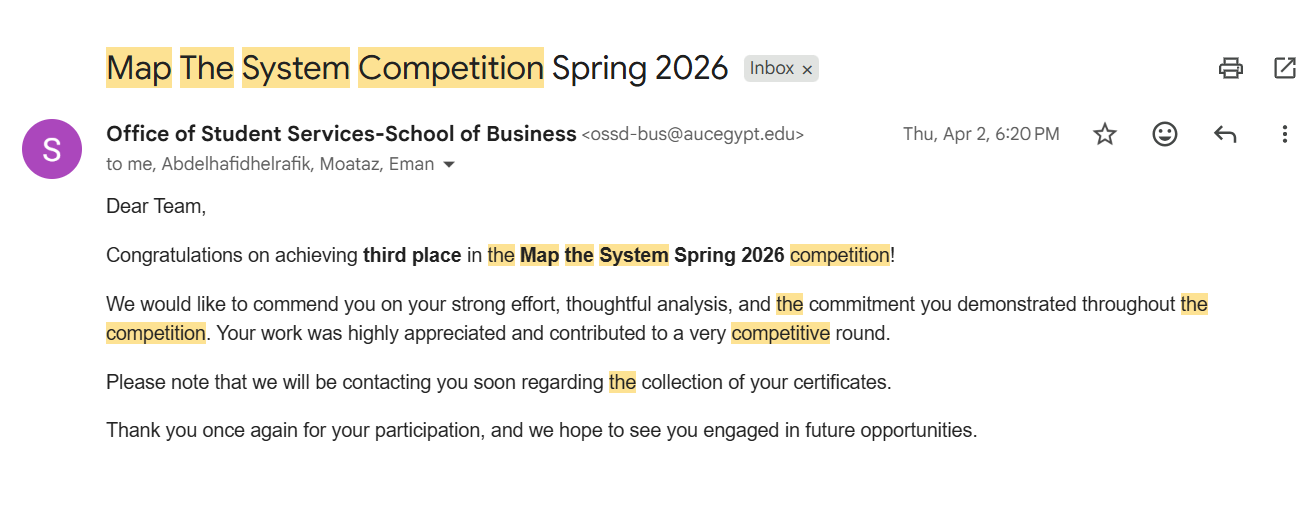
Competition · 3rd Place 🥉
Together with my teammate, I mapped the system behind harga — the phenomenon of irregular migration from North Africa — tracing its roots through colonization, the education paradox, and economic constraints. We placed 3rd at the AUC Business School competition.
Why I joined
I wanted to bring a decolonial lens to a conversation that is too often reduced to statistics. Harga is not a crisis — it is a symptom. I needed to say that out loud.
What I learned
Systems thinking forced me to hold contradictions simultaneously: how something as structural as colonization manifests in an individual's desperate decision to cross a sea. I left a better analyst — and a more compassionate one.
Going forward
I will carry this framework into my ILO research on aid shocks and Tunisian youth employment. The systems are always connected.
Diploma · UN University
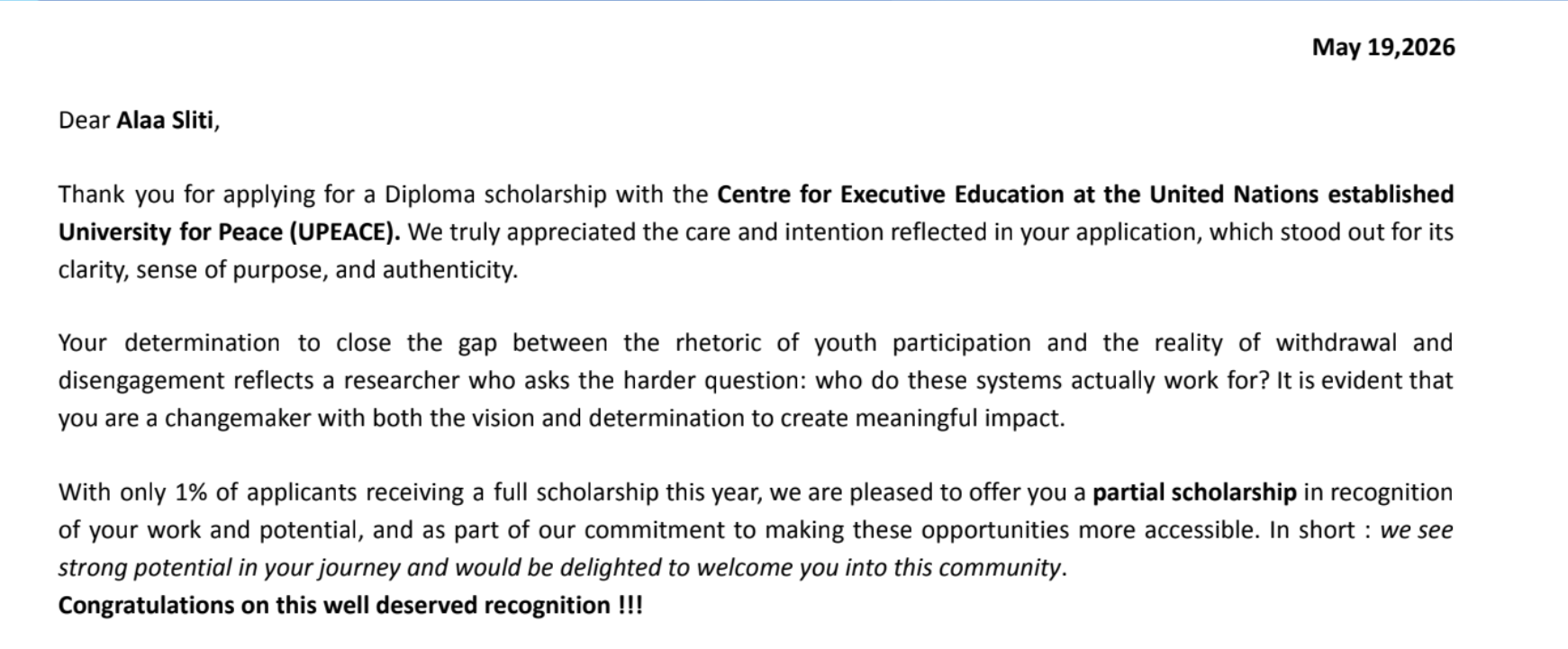
I was accepted into the Leadership Diploma offered by the University for Peace — a United Nations-affiliated university. This program deepens my understanding of peace leadership, governance, and conflict transformation from a global academic framework.
What it means to me
Being accepted into a UN university program is not just a credential — it is a confirmation that the work I have been doing in humanitarian settings, advocacy, and research is part of a larger conversation happening at the highest levels.
Plan of action
I will use the frameworks from UPEACE to deepen my research on democratic governance in the MENA region and to inform how I engage with communities in my future policy work.
Fellowship · Switzerland · June 2026
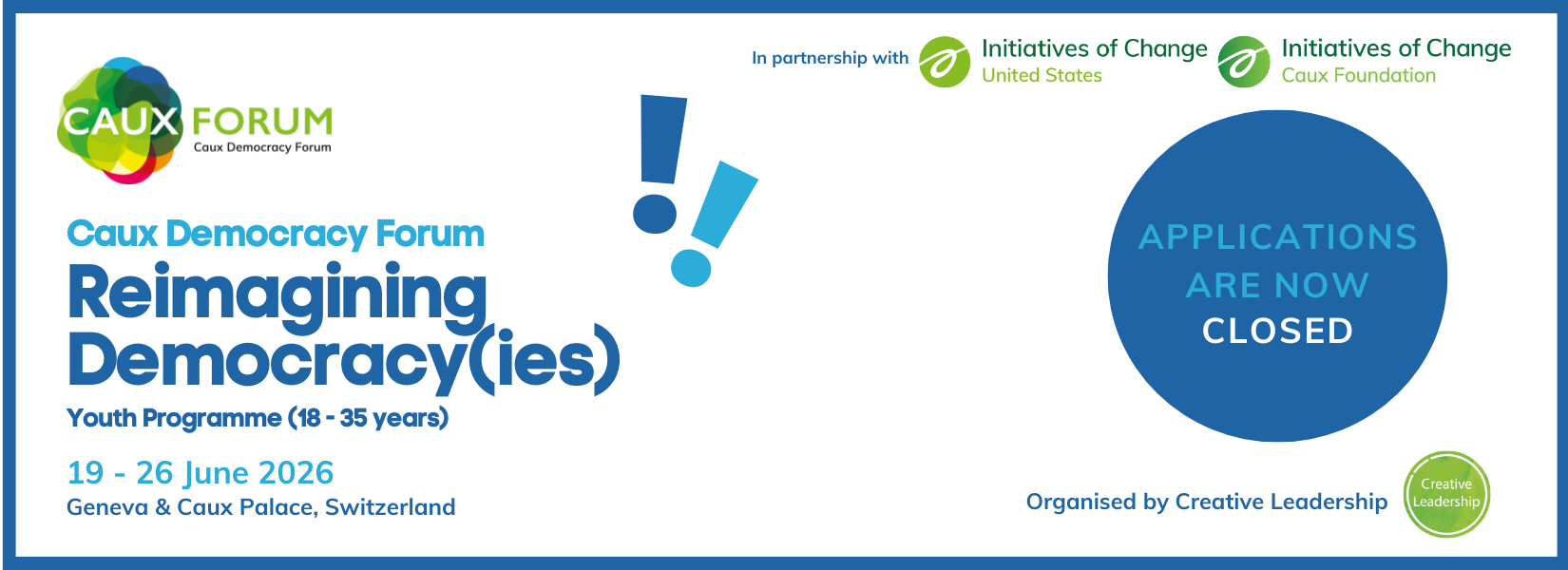
For the second time, I was accepted into the Reimagining Democracy(ies) Youth Programme at the Caux Democracy Forum. This year, I will also be presenting original research — my comparative study of European deliberative democracy models and North African governance contexts, exploring what "democracy" actually means when it is developed from the outside in.
Research focus
My research investigates whether deliberative democracy models developed in European contexts can be meaningfully adapted to North African political realities — or whether doing so reproduces the very colonial dynamics it claims to challenge.
Self-awareness
Being accepted again felt like a vote of confidence in the rigor and relevance of my perspective. As a Tunisian woman doing economics and governance research, I bring a positionality that is not often represented in these global youth forums.
Critical analysis
The application process itself was a lesson: I had to articulate why my presence and my research add something that cannot be substituted. That is not arrogance — it is advocacy for the legitimacy of Global South scholarship.
Component Two
From a best essay award to a research internship at the ILO, this semester pushed the boundaries of what I thought I was capable of.
My thesis: that Egypt's national narrative reforms placing women in the workforce are not only insufficient, but gender regressive. Through rigorous economic analysis and original charts, I challenged the dominant framing — and won.
The award also opened the door to a high-panel debate with the chair of the Economics Department, leading economists, the World Bank Yemen and Egypt Heads, and representatives of the Economic Research Forum.
Why I wrote this
The narrative that "putting women to work" is progress troubled me deeply. Progress requires structural change, not optics — and I wanted the data to show that.
Self-awareness
Sitting at that panel was surreal. But I also felt I belonged there — and that confidence came from knowing my work was thorough, honest, and grounded.
Critical insight
Feminist economics is not a soft critique. It is one of the most technically rigorous interventions you can make on development data. This competition taught me to own that.
Internship · ILO Tunisia · Summer 2026
I secured a research-focused internship at the ILO Tunisia office under supervisor Jad Boubaker. My research centers on how USAID and Swiss Cooperation aid cuts have affected Tunisian youth employment outcomes — a topic that sits at the intersection of global development finance, political economy, and the everyday lives of young Tunisians.
Research framing
Aid shocks are not just fiscal events — they restructure labor markets, reduce vocational training capacity, and disproportionately impact young people already navigating a fragile economy. My goal is to quantify this and make it visible to policymakers.
Plan of action
I will use the econometric skills I built in ECON 4031 to construct a rigorous dataset and analysis. This internship is the bridge between my academic training and real-world policy impact.
Participation · AUC
I attended the AUC Employment Fair as part of my ongoing professional development practice. While I engage with these spaces consistently, I also reflect critically on them.
Honest reflection
The corners remain largely the same year after year, and as an international student, the opportunities presented rarely translate meaningfully to my context. I leave with awareness more than with leads — and I think that awareness itself is a form of learning. It pushes me to build my own path rather than waiting for a system that was not designed with me in mind.
Component Three
Service is not an activity on a list — it is a commitment that shows up even during Ramadan, even during exams, even when it is inconvenient.
Volunteering · Aal Raseef
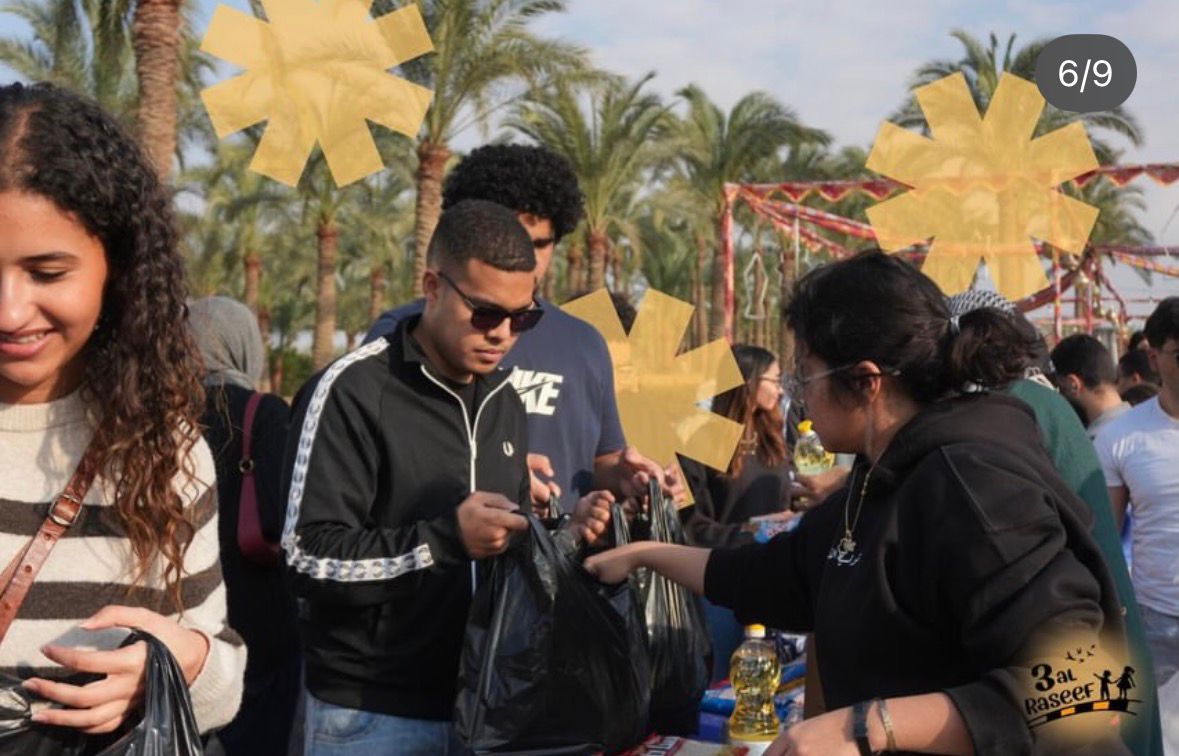
With Aal Raseef, I participated in Ramadan food packing at AUC and helped with the distribution in Mansheyat Nasser — one of Cairo's most densely populated informal neighborhoods. This is not the first time I have done this, and it will not be the last.
What it felt like
There is something about distributing food during Ramadan that makes you feel profoundly human. The month carries its own energy — everyone is softer, more generous, more awake to each other's struggles.
Critical analysis
Direct service is necessary but not sufficient. Each box I packed reminded me of the structural questions I ask in my research: why are people food insecure? What economic conditions created Mansheyat Nasser? My volunteering and my academic work feed each other.
Going forward
I want to continue showing up to Aal Raseef not just during Ramadan, but as a year-round commitment. Presence matters.
"Service reminds me that the problems I study in papers are the lives people are actually living."
— Personal reflection, Spring 2026
This semester I wore two hats at the Symposium: as a member of the Logistics Committee, I helped coordinate the operational backbone of the event. But the experience that stayed with me was co-heading the Arts Committee, where we designed and facilitated an arts workshop around the concept of resistance — inviting participants to explore, define, and express what resistance means to them through creative practice.
What the workshop was
We created a space where people could voice their understanding of resistance not through argument or debate, but through art. Painting, writing, collage, movement — whatever form felt true. It was about giving resistance a shape that words alone cannot hold.
Self-awareness
Co-leading a creative space is a different kind of leadership from what I usually practice. It required me to hold space rather than direct it — to trust the process and the people in the room. That was harder than I expected, and more rewarding.
Critical analysis
Art as a political act is something I believe in deeply. In contexts where direct speech carries risk, or where language fails, art becomes a form of testimony. What people made in that workshop mattered — it was not a warm-up exercise, it was the point.
Going forward
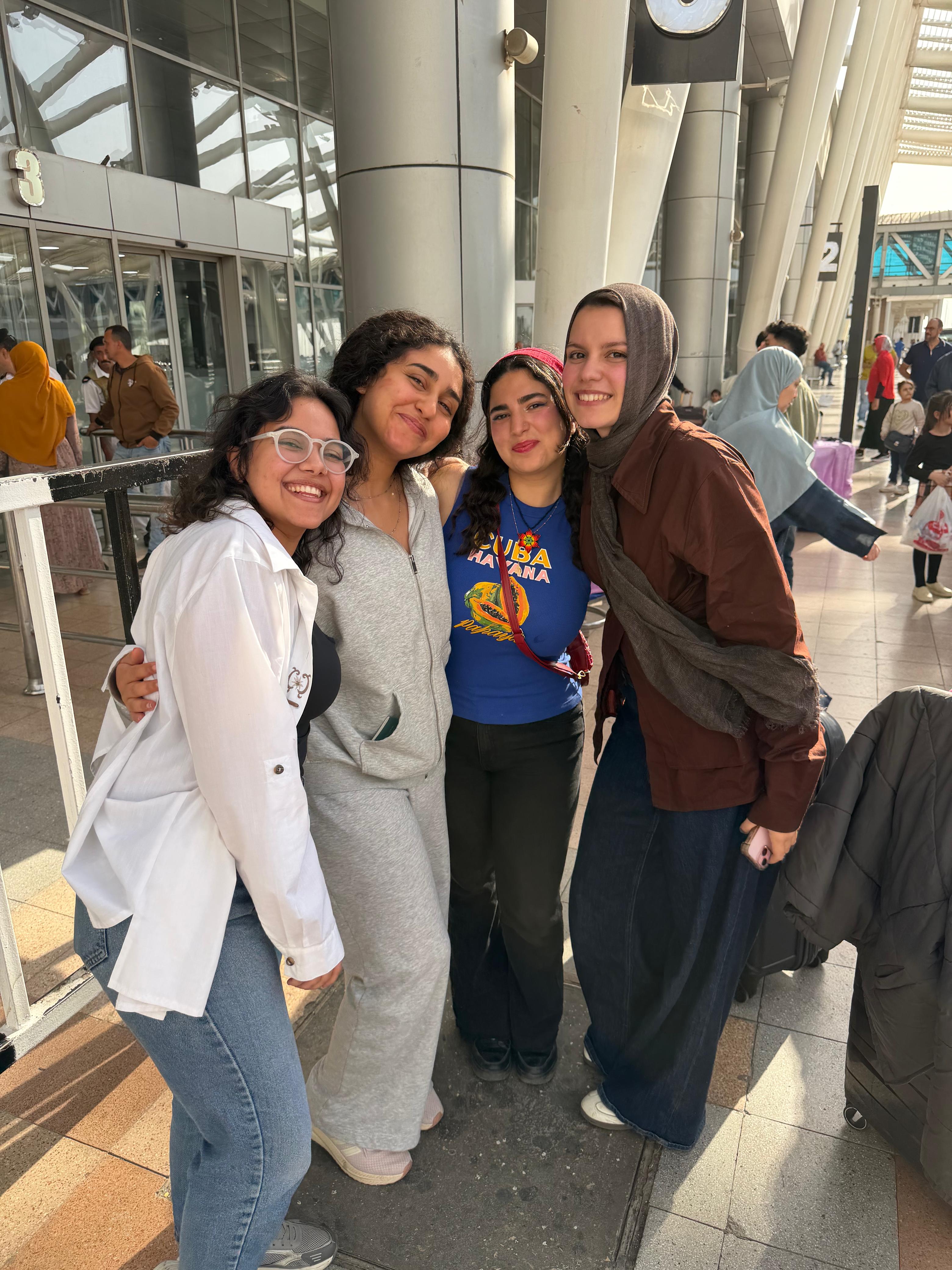
I want to continue creating intersections between creative expression and political awareness. Not every form of civic engagement needs to look like a committee report. Sometimes it looks like a painting on the floor of a workshop room. (I only found a photo with me and Sulaf matching with the Blue mascaras haha)
Personal Space
Because growth is not only measured in awards. Some of the most important things that happened this semester happened quietly.
This Ramadan was a healing phase I did not know I needed. For the first time, I felt I could speak my mind completely — without adjusting my language, without over-explaining to avoid offending, without needing a person to understand me first. It was a God-me relationship that deepened quietly and consistently throughout the month. My faith grew in ways I am still processing. I am so grateful for it.
"I did not need anyone to understand me. That was the whole point."
Most of our cohort was abroad this semester. Staying connected was not automatic instead it took intention, effort, and sometimes just a voice note sent into the void hoping someone was awake. We managed. We always do. And there is something about choosing to maintain a relationship across distance that makes it feel more real, not less. I cannot wait for our last year together.
Looking Ahead
Each experience this semester has pointed toward something. Here is what I intend to do with what I have learned.
Research with Rigor
I will carry my ILO internship methodology into my senior thesis — connecting aid economics, labor outcomes, and gender analysis into a coherent body of work.
Speak Without Apology
Ramadan taught me that I don't need to over-translate myself. In academic and professional spaces, I will continue to speak from my own positionality with confidence.
Bridge Theory & Service
My civic work and my academic work are not separate. I commit to keeping them in dialogue — letting the streets inform the papers and the papers inform the streets.
Last Year, Full Presence
With my cohort, with my scholarship, and with myself — I want to be fully present for what will be my last year at AUC. No coasting. Full investment.